
Marching Through March - Books on Protests & Social Justice Movements

As we close the door of this past month, there are a number of things we celebrated this March - the end of a long winter (shout out to the locals who dealt with that atrocious snow storm), just passing on a year in our first physical location, and perhaps most importantly: Women's History Month!
Here at Belonging Books, we strive to amplify stories by BIPOC individuals and other historically underrepresented communities. Women's History Month provided us with an opportunity to focus on narratives by and for women, especially when exploring the myriad of ways that gender intersects with race, class, ability, and other socio-political identities in social justice contexts. We hope that by centering these important works, you are welcomed to engage in honoring and appreciating the spirit of resistance that continues to shape social change through the lived experiences that informs these books.
You can shop these books from our online store using the button below each book. If a book is out of stock, you can special order it from Belonging Books, or support us through our Bookshop.org page.
Table of Contents:
From Our Women's History Month Display Table
If you came in for a visit in March you would have noticed our display table highlighting many of the women and GNC authors we carry in-store. Here are selections from our display that speak to women's experiences and gender based justice, or takes on civil rights and oppression:

Abolition Feminism Now by Angela Y. Davis, Gina Dent, Erica R. Meiners, Beth E. Richie
An urgent, vital contribution to the indivisible projects abolition and feminism, from leading scholar-activists Angela Y. Davis, Gina Dent, Erica Meiners, and Beth E. Richie.
Abolition. Feminism. Now. is a celebration of freedom work, a movement genealogy, a call to action, and a challenge to those who think of abolition and feminism as separate—even incompatible—political projects.
In this remarkable collaborative work, leading scholar-activists Angela Y. Davis, Gina Dent, Erica R. Meiners, and Beth E. Richie surface the often unrecognized genealogies of queer, anti-capitalist, internationalist, grassroots, and women-of-color-led feminist movements, struggles, and organizations that have helped to define abolition and feminism in the twenty-first century.This pathbreaking book also features illustrations documenting the work of grassroots organizers embodying abolitionist feminist practice.Amplifying the analysis and the theories of change generated out of vibrant community based organizing, Abolition. Feminism. Now. highlights necessary historical linkages, key internationalist learnings, and everyday practices to imagine a future where we can all thrive.

Freedom is a Constant Struggle by Angela Y. Davis
Activist, teacher, author and icon of the Black Power movement Angela Davis talks Ferguson, Palestine, and prison abolition.
In these newly collected essays, interviews, and speeches, world-renowned activist and scholar Angela Y. Davis illuminates the connections between struggles against state violence and oppression throughout history and around the world.
Reflecting on the importance of black feminism, intersectionality, and prison abolitionism for today's struggles, Davis discusses the legacies of previous liberation struggles, from the Black Freedom Movement to the South African anti-Apartheid movement. She highlights connections and analyzes today's struggles against state terror, from Ferguson to Palestine.
Facing a world of outrageous injustice, Davis challenges us to imagine and build the movement for human liberation. And in doing so, she reminds us that "Freedom is a constant struggle."

The Woman They Could Not Silence: The Shocking Story of a Woman Who Dared to Fight Back by Kate Moore
1860: As the clash between the states rolls slowly to a boil, Elizabeth Packard, housewife and mother of six, is facing her own battle. The enemy sits across the table and sleeps in the next room. Threatened by Elizabeth’s intellect, independence, and outspokenness, her husband of twenty-one years is plotting against her and makes a plan to put her back in her place. One summer morning, he has her committed to an insane asylum.
The horrific conditions inside the Illinois State Hospital in Jacksonville, Illinois, are overseen by Dr. Andrew McFarland, a man who will prove to be even more dangerous to Elizabeth than her traitorous husband. But most disturbing is that Elizabeth is not the only sane woman confined to the institution. There are many rational women on her ward who tell the same story: they’ve been committed not because they need medical treatment, but to keep them in line—conveniently labeled “crazy” so their voices are ignored.
No one is willing to fight for their freedom and, disenfranchised both by gender and the stigma of their supposed madness, they cannot possibly fight for themselves. But Elizabeth is about to discover that the merit of losing everything is that you then have nothing to lose…
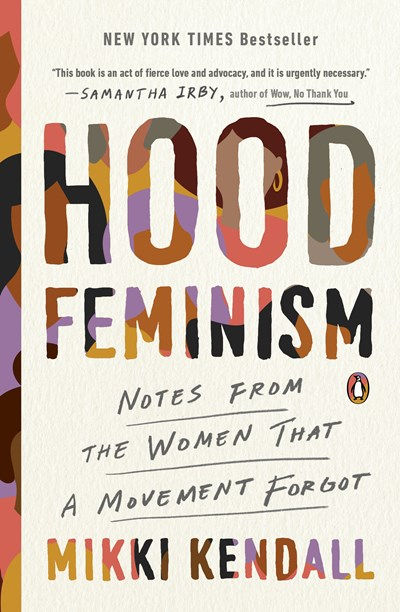
Hood Feminism: Notes from the Woman that a Movement Forgot by Mikki Kendall
A potent and electrifying critique of today’s feminist movement announcing a fresh new voice in black feminism
Today's feminist movement has a glaring blind spot, and paradoxically, it is women. Mainstream feminists rarely talk about meeting basic needs as a feminist issue, argues Mikki Kendall, but food insecurity, access to quality education, safe neighborhoods, a living wage, and medical care are all feminist issues. All too often, however, the focus is not on basic survival for the many, but on increasing privilege for the few. That feminists refuse to prioritize these issues has only exacerbated the age-old problem of both internecine discord and women who rebuff at carrying the title. Moreover, prominent white feminists broadly suffer from their own myopia with regard to how things like race, class, sexual orientation, and ability intersect with gender. How can we stand in solidarity as a movement, Kendall asks, when there is the distinct likelihood that some women are oppressing others?
In her searing collection of essays, Mikki Kendall takes aim at the legitimacy of the modern feminist movement, arguing that it has chronically failed to address the needs of all but a few women. Drawing on her own experiences with hunger, violence, and hypersexualization, along with incisive commentary on reproductive rights, politics, pop culture, the stigma of mental health, and more, Hood Feminism delivers an irrefutable indictment of a movement in flux. An unforgettable debut, Kendall has written a ferocious clarion call to all would-be feminists to live out the true mandate of the movement in thought and in deed.

Eloquent Rage: A Black Feminist Discovers Her Superpower by Brittney Cooper
So what if it’s true that Black women are mad as hell? They have the right to be. In the Black feminist tradition of Audre Lorde, Brittney Cooper reminds us that anger is a powerful source of energy that can give us the strength to keep on fighting.
Far too often, Black women’s anger has been caricatured into an ugly and destructive force that threatens the civility and social fabric of American democracy. But Cooper shows us that there is more to the story than that. Black women’s eloquent rage is what makes Serena Williams such a powerful tennis player. It’s what makes Beyoncé’s girl power anthems resonate so hard. It’s what makes Michelle Obama an icon. Eloquent rage keeps us all honest and accountable. It reminds women that they don’t have to settle for less. When Cooper learned of her grandmother's eloquent rage about love, sex, and marriage in an epic and hilarious front-porch confrontation, her life was changed. And it took another intervention, this time staged by one of her homegirls, to turn Cooper into the fierce feminist she is today. This book argues that ultimately feminism, friendship, and faith in one's own superpowers are all we really need to turn things right side up again.
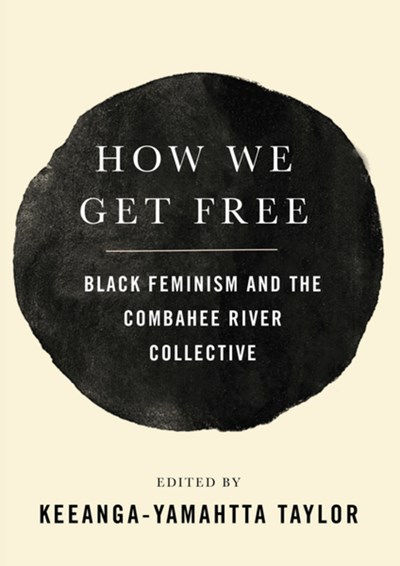
How We Get Free: Black Feminism and the Combahee River Collective by Keeanga-Yamahtta Taylor
"If Black women were free, it would mean that everyone else would have to be free." —Combahee River Collective Statement
The Combahee River Collective, a path-breaking group of radical black feminists, was one of the most important organizations to develop out of the antiracist and women’s liberation movements of the 1960s and 70s. In this collection of essays and interviews edited by activist-scholar Keeanga-Yamahtta Taylor, founding members of the organization and contemporary activists reflect on the legacy of its contributions to Black feminism and its impact on today’s struggles.

Wild Girls: How the Outdoors Shaped the Women Who Challenged a Nation by Tiya Miles
An award-winning historian shows how girls who found self-understanding in the natural world became women who changed America.
Harriet Tubman, forced to labor outdoors on a Maryland plantation, learned from the land a terrain for escape. Louisa May Alcott ran wild, eluding gendered expectations in New England. The Indigenous women’s basketball team from Fort Shaw, Montana, recaptured a sense of pride in physical prowess as they trounced the white teams of the 1904 World’s Fair. Celebrating women like these who acted on their confidence outdoors, Wild Girls brings new context to misunderstood icons like Sacagawea and Pocahontas, and to underappreciated figures like Native American activist writer Zitkála-Šá, also known as Gertrude Bonnin, farmworkers’ champion Dolores Huerta, and labor and Civil Rights organizer Grace Lee Boggs.
This beautiful, meditative work of history puts girls of all races—and the landscapes they loved—at center stage and reveals the impact of the outdoors on women’s independence, resourcefulness, and vision. For these trailblazing women of the nineteenth and early twentieth centuries, navigating the woods, following the stars, playing sports, and taking to the streets in peaceful protest were not only joyful pursuits, but also techniques to resist assimilation, racism, and sexism. Lyrically written and full of archival discoveries, Wild Girls evokes landscapes as richly as the girls who roamed in them—and argues for equal access to outdoor spaces for young women of every race and class today.

Amazons, Abolitionists, and Activists: A Graphic History of Women's Fight for Their Rights by Mikki Kendall and A. D'Amico
The ongoing struggle for women’s rights has spanned human history, touched nearly every culture on Earth, and encompassed a wide range of issues, such as the right to vote, work, get an education, own property, exercise bodily autonomy, and beyond. Amazons, Abolitionists, and Activists is a fun and fascinating graphic novel–style primer that covers the key figures and events that have advanced women’s rights from antiquity to the modern era. In addition, this compelling book illuminates the stories of notable women throughout history—from queens and freedom fighters to warriors and spies—and the progressive movements led by women that have shaped history, including abolition, suffrage, labor, civil rights, LGBTQ liberation, reproductive rights, and more.
Examining where we've been, where we are, and where we're going, Amazons, Abolitionists, and Activists is an indispensable resource for people of all genders interested in the fight for a more liberated future.

Loud by Drew Afualo
Drew Afualo is best known as the internet’s “Crusader for Women” and has established herself as a preeminent feminist leader of her generation. Loud is part manual, part manifesto, and part memoir. It makes it clear that behind Afualo’s fearsome laugh is a mission and a life philosophy, a strategy for self-confidence from the inside out, and a pathway to once and for all remove men from the center of how women and femmes think about themselves.
Afualo has amassed more than nine million followers across her social platforms. When she started creating content in 2020, she quickly realized that many men on social media were disparaging women and other marginalized groups with rampant fatphobia, racism, and other forms of bigotry, having very real-life consequences. It didn’t take long for her to step into the role of unofficial watchdog for misogyny. Her signature laugh is now a feminist call to arms, a summoning cry to rid the internet (and our hearts, minds, and lives) of “terrible men” and fight outdated patriarchal ideals.

Rest is Resistance by Tricia Hersey
Disrupt and push back against capitalism and white supremacy as Tricia Hersey, aka The Nap Bishop, encourages us to connect to the liberating power of rest, daydreaming, and naps as a foundation for healing and justice.
What would it be like to live in a well-rested world? Far too many of us have claimed productivity as the cornerstone of success. Brainwashed by capitalism, we subject our bodies and minds to work at an unrealistic, damaging, and machine‑level pace—feeding into the same engine that enslaved millions into brutal labor for its own relentless benefit.
In Rest Is Resistance, Tricia Hersey, aka the Nap Bishop, casts an illuminating light on our troubled relationship with rest and how to imagine and dream our way to a future where rest is exalted. Our worth does not reside in how much we produce, especially not for a system that exploits and dehumanizes us. Rest, in its simplest form, becomes an act of resistance and a reclaiming of power because it asserts our most basic humanity. We are enough. The systems cannot have us.
Rest Is Resistance is rooted in spiritual energy and centered in Black liberation, womanism, somatics, and Afrofuturism. With captivating storytelling and practical advice, all delivered in Hersey’s lyrical voice and informed by her deep experience in theology, activism, and performance art, Rest Is Resistance is a call to action, a battle cry, a field guide, and a manifesto for all of us who are sleep deprived, searching for justice, and longing to be liberated from the oppressive grip of Grind Culture.
Social Justice Movements & Protests
When we read and learn about the history of social justice movements and protests, we can apply those lessons, tools, and ways of organizing and making positive change to our activist practices today.
Literary Fiction

Chain Gang All-Stars by Nana Kwame Adjei-Brenyah
She felt their eyes, all those executioners…
Loretta Thurwar and Hamara “Hurricane Staxxx” Stacker are the stars of the Chain-Gang All-Stars, the cornerstone of CAPE, or Criminal Action Penal Entertainment, a highly popular, highly controversial profit-raising program in America’s increasingly dominant private prison industry. It’s the return of the gladiators, and prisoners are competing for the ultimate prize: their freedom.
In CAPE, prisoners travel as Links in Chain-Gangs, competing in death matches before packed arenas with righteous protestors at the gates. Thurwar and Staxxx, both teammates and lovers, are the fan favorites. And if all goes well, Thurwar will be free in just a few matches, a fact she carries as heavily as her lethal hammer. As she prepares to leave her fellow Links, Thurwar considers how she might help preserve their humanity, in defiance of these so-called games. But CAPE’s corporate owners will stop at nothing to protect their status quo, and the obstacles they lay in Thurwar’s path have devastating consequences.
Moving from the Links in the field to the protestors, to the CAPE employees and beyond, Chain-Gang All-Stars is a kaleidoscopic, excoriating look at the American prison system’s unholy alliance of systemic racism, unchecked capitalism, and mass incarceration, and a clear-eyed reckoning with what freedom in this country really means from a “new and necessary American voice” (Tommy Orange, The New York Times Book Review).

My Friends by Hisham Matar
One evening, as a young boy growing up in Benghazi, Khaled hears a bizarre short story read aloud on the radio, about a man being eaten alive by a cat, and has the sense that his life has been changed forever. Obsessed by the power of those words—and by their enigmatic author, Hosam Zowa—Khaled eventually embarks on a journey that will take him far from home, to pursue a life of the mind at the University of Edinburgh.
There, thrust into an open society that is miles away from the world he knew in Libya, Khaled begins to change. He attends a protest against the Qaddafi regime in London, only to watch it explode into tragedy. In a flash, Khaled finds himself injured, clinging to life, unable to leave Britain, much less return to the country of his birth. To even tell his mother and father back home what he has done, on tapped phone lines, would expose them to danger.
When a chance encounter in a hotel brings Khaled face-to-face with Hosam Zowa, the author of the fateful short story, he is subsumed into the deepest friendship of his life. It is a friendship that not only sustains him but eventually forces him, as the Arab Spring erupts, to confront agonizing tensions between revolution and safety, family and exile, and how to define his own sense of self against those closest to him.
A devastating meditation on friendship and family, and the ways in which time tests—and frays—those bonds,My Friends is an achingly beautiful work of literature by an author working at the peak of his powers.

Burn Down Master's House by Clay Cane
As turmoil simmers within a divided nation, smoke from another blaze begins to rise. Sparked by individual acts of resistance among those enslaved across the American South, their seemingly disparate rebellions fuel a singular inferno of justice, connecting them in ways quiet at times, explosive at others. As these flames rise, so will they.
Luke, quick-witted and literate, and Henri, a man with a strong and defiant spirit, forge an unbreakable bond at a Virginia plantation called Magnolia Row. Both seek escape from unimaginable cruelty. And sure as the fires of hell, Luke and Henri will leave their mark, sparking resistance among the lives they touch…
One is Josephine, a young, sharp, and observant girl who wields silence as her greatest weapon. A witness to Luke and Henri’s resilience, she listens, watches, waits for the moment to make her move.
Then there is Charity Butler, her husband a formerly enslaved man who proved his ferocity as a young boy standing alongside Josephine. At his encouragement, Charity fights for her freedom in court and wins – only to battle a deeply unjust system designed to destroy the life they’ve built.
And finally, there is Nathaniel, who ruthlessly exploits other Black people and mirrors the cruelty of the white men who, like him, are enslavers. A perversion of the system of slavery, his fragile and contradictory rule will become a catalyst of its own.
Inspired by the true stories of the profoundly courageous men and women who dared to fight back, Burn Down Master’s House is a singular tour de force of a novel—breathtaking in scope, compassion, and a timeliness that speaks powerfully to our present era.

The Underground Railroad by Colson Whitehead
Cora is a slave on a cotton plantation in Georgia. An outcast even among her fellow Africans, she is on the cusp of womanhood—where greater pain awaits. And so when Caesar, a slave who has recently arrived from Virginia, urges her to join him on the Underground Railroad, she seizes the opportunity and escapes with him.
In Colson Whitehead's ingenious conception, the Underground Railroad is no mere metaphor: engineers and conductors operate a secret network of actual tracks and tunnels beneath the Southern soil. Cora embarks on a harrowing flight from one state to the next, encountering, like Gulliver, strange yet familiar iterations of her own world at each stop.
As Whitehead brilliantly re-creates the terrors of the antebellum era, he weaves in the saga of our nation, from the brutal abduction of Africans to the unfulfilled promises of the present day. The Underground Railroadis both the gripping tale of one woman's will to escape the horrors of bondage—and a powerful meditation on the history we all share.

The Lion Women of Tehran by Marjan Kamali
In 1950s Tehran, seven-year-old Ellie lives in grand comfort until the untimely death of her father, forcing Ellie and her mother to move to a tiny home downtown. Lonely and bearing the brunt of her mother’s endless grievances, Ellie dreams for a friend to alleviate her isolation.
Luckily, on the first day of school, she meets Homa, a kind girl with a brave and irrepressible spirit. Together, the two girls play games, learn to cook in the stone kitchen of Homa’s warm home, wander through the colorful stalls of the Grand Bazaar, and share their ambitions of becoming “lion women.”
But their happiness is disrupted when Ellie and her mother are afforded the opportunity to return to their previous bourgeois life. Now a popular student at the best girls’ high school in Iran, Ellie’s memories of Homa begin to fade. Years later, however, her sudden reappearance in Ellie’s privileged world alters the course of both of their lives.
Together, the two young women come of age and pursue their own goals for meaningful futures. But as the political turmoil in Iran builds to a breaking point, one earth-shattering betrayal will have enormous consequences.
Fantasy & Science Fiction

Amplitudes: Stories of Queer and Trans Futurity by Lee Mandelo
Revolutionary and visionary, these twenty-two speculative stories edited by Lambda, Nebula and Hugo finalist Lee Mandelo explore the vast potentialities of our queer and trans futures.
From self-styled knights fighting in dystopian city streets to conservationists finding love in the Appalachian forests; from social media posts about domestic “bliss” in a lottery-based, state-housing skyscraper to herding feral cats off of one’s scientific equipment; from street drugs that create doppelgangers to dance-club cruising at the edge of the galaxy—Amplitudes: Stories of Queer and Trans Futurity interrogates the farthest borders of the sci-fi landscape to imagine how queer life will look centuries in the future—or ten years from now.
Filled with brutal honesty, raw emotions, sexual escapades, and delightful whimsy, Amplitudes speaks to the longstanding tradition of queer fiction as protest. This essential collection serves as an evolving map of our celebrations, anxieties, wishes, pitfalls, and—most of all—our rallying cry that we're here, we're queer—and the future is ours!

Babel: Or the Necessity of Violence: An Arcane History of the Oxford Translators’ Revolution by R.F. Kuang
Traduttore, traditore: An act of translation is always an act of betrayal.
1828. Robin Swift, orphaned by cholera in Canton, is brought to London by the mysterious Professor Lovell. There, he trains for years in Latin, Ancient Greek, and Chinese, all in preparation for the day he’ll enroll in Oxford University’s prestigious Royal Institute of Translation—also known as Babel.
Babel is the world's center for translation and, more importantly, magic. The unique magic system of silver working—the art of manifesting the meaning lost in translation using enchanted silver bars—has made the British unparalleled in power, as its knowledge serves the Empire’s quest for colonization.
For Robin, Oxford is a utopia dedicated to the pursuit of knowledge. But knowledge obeys power, and as a Chinese boy raised in Britain, Robin realizes serving Babel means betraying his motherland. As his studies progress, Robin finds himself caught between Babel and the shadowy Hermes Society, a secret society dedicated to stopping imperial expansion. When Britain pursues an unjust war with China over silver and opium, Robin must decide…

The Poppy War by R.F. Kuang
From #1 New York Times bestselling author of Babel and Yellowface, the brilliantly imaginative debut of R.F. Kuang: an epic historical military fantasy, inspired by the bloody history of China’s twentieth century and filled with treachery and magic, in the tradition of Ken Liu’s Grace of Kings and N.K. Jemisin’s Inheritance Trilogy.
When Rin aced the Keju—the Empire-wide test to find the most talented youth to learn at the Academies—it was a shock to everyone: to the test officials, who couldn’t believe a war orphan from Rooster Province could pass without cheating; to Rin’s guardians, who believed they’d finally be able to marry her off and further their criminal enterprise; and to Rin herself, who realized she was finally free of the servitude and despair that had made up her daily existence. That she got into Sinegard—the most elite military school in Nikan—was even more surprising.
But surprises aren’t always good.
Because being a dark-skinned peasant girl from the south is not an easy thing at Sinegard. Targeted from the outset by rival classmates for her color, poverty, and gender, Rin discovers in this grimdark fantasy that she possesses a lethal, unearthly power—an aptitude for the nearly-mythical art of shamanism. Exploring the depths of her gift with the help of a seemingly insane teacher and psychoactive substances, Rin learns that gods long thought dead are very much alive—and that mastering control over those powers could mean more than just surviving school.
For while the Nikara Empire is at peace, the Federation of Mugen still lurks across a narrow sea. The militarily advanced Federation occupied Nikan for decades after the First Poppy War, and only barely lost the continent in the Second. And while most of the people are complacent to go about their lives, a few are aware that a Third Poppy War is just a spark away...
Rin’s shamanic powers may be the only way to save her people. But as she finds out more about the god that has chosen her, the vengeful Phoenix, she fears that winning the war may cost her humanity... and that it may already be too late.

Blood Over Bright Haven by M.L. Wang
For twenty years, Sciona has devoted every waking moment to the study of magic, fueled by a mad desire to achieve the impossible: to be the first woman ever admitted to the High Magistry at the University of Magics and Industry.
When Sciona finally passes the qualifying exam and becomes a highmage, she finds her challenges have just begun. Her new colleagues are determined to make her feel unwelcome—and, instead of a qualified lab assistant, they give her a janitor.
What neither Sciona nor her peers realize is that her taciturn assistant was not always a janitor. Ten years ago, he was a nomadic hunter who lost his family on their perilous journey from the wild plains to the city. But now he sees the opportunity to understand the forces that decimated his tribe, drove him from his homeland, and keep the privileged in power.
At first, mage and outsider have a fractious relationship. But working together, they uncover an ancient secret that could change the course of magic forever—if it doesn’t get them killed first.

The Fifth Season by N.K. Jemisin
At the end of the world, a woman must hide her secret power and find her kidnapped daughter in this "intricate and extraordinary" Hugo Award winning novel of power, oppression, and revolution. (The New York Times)
This is the way the world ends... for the last time.
It starts with the great red rift across the heart of the world's sole continent, spewing ash that blots out the sun. It starts with death, with a murdered son and a missing daughter. It starts with betrayal, and long dormant wounds rising up to fester.
This is the Stillness, a land long familiar with catastrophe, where the power of the earth is wielded as a weapon. And where there is no mercy.
Non-Fiction
History & Politics

An Indigenous Peoples' History of the United States by Roxanne Dunbar-Ortiz
The first history of the United States told from the perspective of indigenous peoples
Today in the United States, there are more than five hundred federally recognized Indigenous nations comprising nearly three million people, descendants of the fifteen million Native people who once inhabited this land. The centuries-long genocidal program of the US settler-colonial regimen has largely been omitted from history. Now, for the first time, acclaimed historian and activist Roxanne Dunbar-Ortiz offers a history of the United States told from the perspective of Indigenous peoples and reveals how Native Americans, for centuries, actively resisted expansion of the US empire.
With growing support for movements such as the campaign to abolish Columbus Day and replace it with Indigenous Peoples’ Day and the Dakota Access Pipeline protest led by the Standing Rock Sioux Tribe, An Indigenous Peoples’ History of the United States is an essential resource providing historical threads that are crucial for understanding the present. In An Indigenous Peoples’ History of the United States, Dunbar-Ortiz adroitly challenges the founding myth of the United States and shows how policy against the Indigenous peoples was colonialist and designed to seize the territories of the original inhabitants, displacing or eliminating them. And as Dunbar-Ortiz reveals, this policy was praised in popular culture, through writers like James Fenimore Cooper and Walt Whitman, and in the highest offices of government and the military. Shockingly, as the genocidal policy reached its zenith under President Andrew Jackson, its ruthlessness was best articulated by US Army general Thomas S. Jesup, who, in 1836, wrote of the Seminoles: “The country can be rid of them only by exterminating them.”
Spanning more than four hundred years, this classic bottom-up peoples’ history radically reframes US history and explodes the silences that have haunted our national narrative.

A Protest History of the United States by Gloria J. Browne-Marshall
Exploring 500 years of protest and resistance in US history—and what the unsung heroes of social movements past can teach us about navigating our chaotic world
In this timely new book in Beacon’s successful ReVisioning History series, professor Gloria Browne-Marshall delves into the history of protest movements and rebellion in the United States. Beginning with Indigenous peoples’ resistance to European colonization and continuing through to today’s climate change demonstrations, Browne-Marshall expands how to think about protest through sharing select historical moments and revealing the role of key players involved in those efforts.
Drawing upon legal documents, archival material, government documents and secondary sources, A Protest History of the United States gives voice to those who pushed back against the mistreatment of others, themselves, and in some instances planet Earth. Browne-Marshall highlights stories of individuals from all walks of life, backgrounds, and time periods who helped bring strong attention to their causes. Those examples of protest include those of Wahunsenacock, more commonly known to history as Chief Powhatan, who took on English invaders in pre-colonial America in 1607; legendary boxer Muhammad Ali's refusal to fight in Vietnam and appealed all the way to the US Supreme Court; and David Buckel, LGBTQ+ rights lawyer and environmental activist who protested against fossil fuels by committing self-immolation in 2018.
Regardless of whether these protests accomplished their end goals, Browne-Marshall reminds us that not only is dissent meaningful and impactful but is an essential tool for eliciting long lasting change.

Our Work Is Everywhere: An Illustrated Oral History of Queer and Trans Resistance by Syan Rose
Over the past ten years, we have witnessed the rise of queer and trans communities that have defied and challenged those who have historically opposed them. Through bold, symbolic imagery and surrealist, overlapping landscapes, queer illustrator and curator Syan Rose shines a light on the faces and voices of these diverse, amorphous, messy, real and imagined queer and trans communities.
In their own words, queer and trans organizers, artists, healers, comrades, and leaders speak honestly and authentically about their own experiences with power, love, pain, and magic to create a textured and nuanced portrait of queer and trans realities in America. The many themes include Black femme mental health, Pacific Islander authorship, fat queer performance art, disability and healthcare practice, sex worker activism, and much more. Accompanying the narratives are Rose’s startling and sinuous images that brings these leaders’ words to visual life.
Our Work Is Everywhere is a graphic nonfiction book that underscores the brilliance and passion of queer and trans resistance.
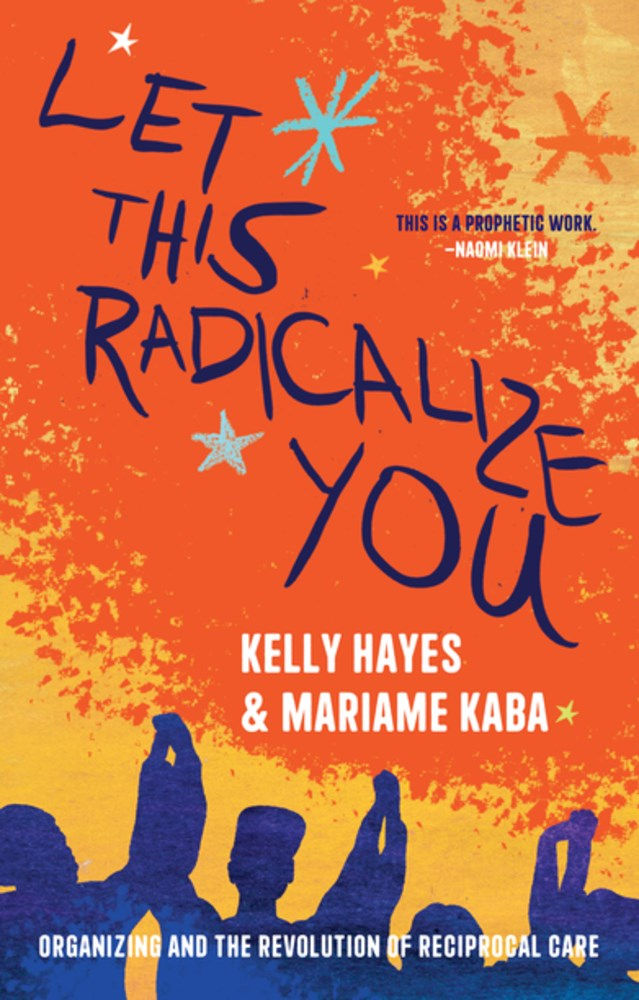
Let This Radicalize You: Organizing and the Revolution of Reciprocal Care by Kelly Hayes and Mariame Kaba
Doing Justice: The Revolution of Rescue and Reciprocal Care is a practical and imaginative resource for activists and organizers building power in an era of destabilization and catastrophe.
What fuels and sustains activism and organizing when it feels like our worlds are collapsing? Let This Radicalize You is a practical and imaginative resource for activists and organizers building power in an era of destabilization and catastrophe.
Longtime organizers and movement educators Mariame Kaba and Kelly Hayes examine some of the political lessons of the COVID-19 pandemic, including the convergence of mass protest and mass formations of mutual aid, and consider what this confluence of power can teach us about a future that will require mass acts of care, rescue and defense, in the face of both state violence and environmental disaster.The book is an assemblage of co-authored reflections, interviews and questions that are intended to aid and empower activists and organizers as they attempt to map their own journeys through the work of justice-making. It includes insights from a spectrum of experienced organizers, including Sharon Lungo, Carlos Saavedra, Ejeris Dixon, Barbara Ransby, and Ruth Wilson Gilmore about some of the difficult and joyous lessons they have learned in their work.

Antifa: The Anti-Fascist Handbook by Mark Bray
As long as there has been fascism, there has been anti-fascism — also known as “antifa.” Born out of resistance to Mussolini and Hitler, the antifa movement has suddenly burst into the headlines amidst opposition to the Trump administration and the alt-right.
In a smart and gripping investigation, historian Mark Bray provides a detailed survey of the full history of anti-fascism from its origins fighting Hitler and Mussolini, to the present day — the first transnational history of postwar anti-fascism in English. Today, critics say shutting down political adversaries is anti-democratic; antifa adherents argue that the horrors of fascism must never be allowed the slightest chance to triumph again. Bray amply demonstrates that antifa simply aims to deny fascists the opportunity to promote their oppressive politics, and to protect tolerant communities from acts of violence promulgated by fascists.
Based on interviews with anti-fascists from around the world, Antifa details the tactics of the movement and the philosophy behind it, offering insight into the growing but little-understood resistance fighting back against fascism in all its guises.

Fight Oligarchy by Bernie Sanders
Sanders breaks down the unprecedented crises we face today in Trump’s America, as Trump undermines democracy at every turn—and how we can effectively fight back.
From the moment that Sanders began his “Fighting Oligarchy” tour in the early days of the Trump administration, it was clear that his message resonated with Americans across the political spectrum. Record-breaking crowds, numbering in the tens of thousands, showed up across the country. It was immediately apparent that large numbers of Americans, in red states and blue states, were prepared to stand up and fight back. In this book, he shows how we can continue that fight.
In a series of short, pointed chapters, Sanders explains how the United States today is an oligarchic society where a small handful of multi-billionaires exercise enormous economic and political power. He describes what it means when the very rich get much richer, while a majority of Americans struggle to pay the rent and put food on the table. And he observes how a corrupt campaign finance system allows billionaires in both parties to increasingly control our political system.
He discusses how, under Trump, we are rapidly moving toward authoritarianism–with a president who is undermining our democracy as he attacks Congress, the courts, the media, law firms and universities in search of more and more power for himself. With relentless optimism and focused energy, Sanders reminds readers that true power rests with the people—and presents a path forward to a reinvigorated democracy.

Viral Justice: How We Grow the World We Want by Ruha Benjamin
Long before the pandemic, Ruha Benjamin was doing groundbreaking research on race, technology, and justice, focusing on big, structural changes. But the twin plagues of COVID-19 and anti-Black police violence inspired her to rethink the importance of small, individual actions. Part memoir, part manifesto, Viral Justice is a sweeping and deeply personal exploration of how we can transform society through the choices we make every day.
Vividly recounting her personal experiences and those of her family, Benjamin shows how seemingly minor decisions and habits could spread virally and have exponentially positive effects. She recounts her father’s premature death, illuminating the devastating impact of the chronic stress of racism, but she also introduces us to community organizers who are fostering mutual aid and collective healing. Through her brother’s experience with the criminal justice system, we see the trauma caused by policing practices and mass imprisonment, but we also witness family members finding strength as they come together to demand justice for their loved ones. And while her own challenges as a young mother reveal the vast inequities of our healthcare system, Benjamin also describes how the support of doulas and midwives can keep Black mothers and babies alive and well.
Born of a stubborn hopefulness, Viral Justice offers a passionate, inspiring, and practical vision of how small changes can add up to large ones, transforming our relationships and communities and helping us build a more just and joyful world.
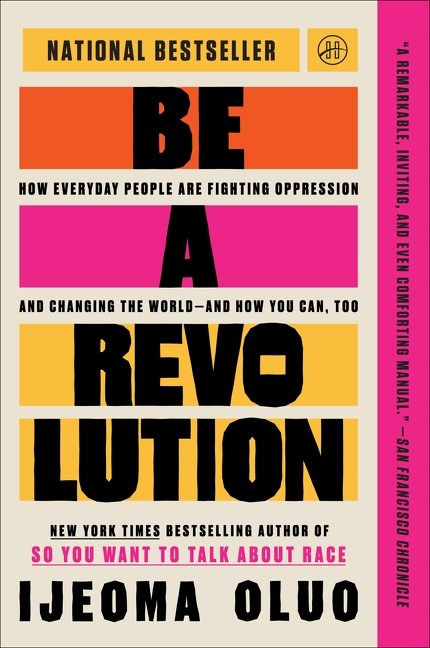
Be a Revolution: How Everyday People Are Fighting Oppression and Changing the World—and How You Can, Too by Ijeoma Oluo
In the #1 New York Times bestseller So You Want To Talk About Race, Ijeoma Oluo offered a vital guide for how to talk about important issues of race and racism in society. In Mediocre: The Dangerous Legacy of White Male America, she discussed the ways in which white male supremacy has had an impact on our systems, our culture, and our lives throughout American history. But now that we better understand these systems of oppression, the question is this: What can we do about them?
With Be A Revolution: How Everyday People are Fighting Oppression and Changing the World—and How You Can, Too, Oluo aims to show how people across America are using community organizing to create real positive change in our structures. Looking at many of our most powerful systems—like education, media, labor, health, housing, policing, and more—she highlights what people are doing to create change for intersectional racial equity. She also illustrates various ways in which the reader can find entryways into this essential social justice work, or can bring some of this important work being done elsewhere to where they live.
This book aims to not only be educational, but to inspire real change. Oluo wishes to take our conversations on race and racism out of a place of pure pain and trauma, and into a place of loving, transformative action. Be A Revolution is both an urgent chronicle of this important moment in history, as well as an inspiring and restorative call to action against systemic racism.
Drawing on extensive interviews with grassroots organizers, Be a Revolution provides a practical toolkit for change, exploring actionable strategies in areas like:
Abolition in Action: Go beyond the theory of reform and punishment to see how activists like Richie Reseda are building new systems of accountability and transformative justice.
Intersectional Gender Justice: Learn from movement leaders like Tarana Burke why the fight for bodily autonomy must address the unique ways race, queerphobia, and transphobia impact our communities.
Disability Justice: Discover why there is no racial justice without disability justice, and how ableism underpins the hierarchies of body and mind that fuel systemic oppression.
Labor and Environmental Justice: Uncover the deep connections between racism, labor exploitation, and environmental apartheid with organizers like Chris Smalls and Jill Mangaliman who are fighting for a just transition.

Me and White Supremacy by Layla F. Saad
The numbers show that readers are ready to do this work—let’s give it to them
When Layla F. Saad began an Instagram challenge called #meandwhitesupremacy, she never predicted it would become a cultural movement. She encouraged people to own up and share their racist behaviors, big and small. She was looking for truth, and she got it...
Thousands of people participated in the challenge, and over 95,000 people downloaded the supporting work The Me and White Supremacy Workbook.
Me and White Supremacy teaches readers how to dismantle the privilege within themselves so that they can stop (often unconsciously) inflicting damage on people of color, and in turn, help other white people do better, too.
Nature & Environmental Science

As Long as Grass Grows: The Indigenous Fight for Environmental Justice, from Colonization to Standing Rock by Dina Gilio-Whitaker
The story of Native peoples’ resistance to environmental injustice and land incursions, and a call for environmentalists to learn from the Indigenous community’s rich history of activism
Through the unique lens of “Indigenized environmental justice,” Indigenous researcher and activist Dina Gilio-Whitaker explores the fraught history of treaty violations, struggles for food and water security, and protection of sacred sites, while highlighting the important leadership of Indigenous women in this centuries-long struggle. As Long As Grass Grows gives readers an accessible history of Indigenous resistance to government and corporate incursions on their lands and offers new approaches to environmental justice activism and policy.
Throughout 2016, the Standing Rock protest put a national spotlight on Indigenous activists, but it also underscored how little Americans know about the longtime historical tensions between Native peoples and the mainstream environmental movement. Ultimately, she argues, modern environmentalists must look to the history of Indigenous resistance for wisdom and inspiration in our common fight for a just and sustainable future.
Memoir & Autobiography

Angela Davis: An Autobiography by Angela Davis
This beautiful new edition of Angela Davis’s classic Autobiography features an expansive new introduction by the author.
“I am excited to be publishing this new edition of my autobiography with Haymarket Books at a time when so many are making collective demands for radical change and are seeking a deeper understanding of the social movements of the past.” —Angela Y. Davis
Angela Davis has been a political activist at the cutting edge of the Black Liberation, feminist, queer, and prison abolitionist movements for more than 50 years. First published and edited by Toni Morrison in 1974, An Autobiography is a powerful and commanding account of her early years in struggle. Davis describes her journey from a childhood on Dynamite Hill in Birmingham, Alabama, to one of the most significant political trials of the century: from her political activity in a New York high school to her work with the U.S. Communist Party, the Black Panther Party, and the Soledad Brothers; and from the faculty of the Philosophy Department at UCLA to the FBI's list of the Ten Most Wanted Fugitives. Told with warmth, brilliance, humor and conviction, Angela Davis’s autobiography is a classic account of a life in struggle with echoes in our own time.

Full of Myself by Austin Channing Brown
In this vulnerable exploration of personal identity, the New York Times bestselling author of I’m Still Here chronicles her efforts to live as her full self in a society that wants Black women in particular to do anything but that.
As an antiracism educator and writer leading through America’s cycles of racial unrest, Austin Channing Brown reached a crossroads. “I love my work,” she writes, “and I am tired. We are tired. Tired of protesting. Tired of ‘saving democracy.' Tired of educating and explaining.” She began to ask, “What do I deserve, not just as a citizen but as a human?”
Full of Myself is her answer to that question. Weaving personal narrative with perceptive social commentary, she offers a look at the mechanisms that limit who Black women are allowed to be—at work, at home, in community—and the defining moments when she decided self-possession is the justice work she had been made to undervalue. From skinny dipping in the ocean to becoming a mom, she delves into the drama of life and invites readers to begin defining themselves not as empty vessels to improve the world, but as a people born free in spirit, in hope, in joy.
For Black women seeking to understand the true roots of their burnout, or anyone wondering what it means to live joyfully in a hostile world, Full of Myself is a breath of fresh air and an invitation to full humanity.

His Name Is George Floyd by Austin Channing Brown
The events of that day are now tragically familiar: on May 25, 2020, George Floyd became the latest Black person to die at the hands of the police, murdered outside of a Minneapolis convenience store by white officer Derek Chauvin. The video recording of his death set off the largest protest movement in the history of the United States, awakening millions to the pervasiveness of racial injustice. But long before his face was painted onto countless murals and his name became synonymous with civil rights, Floyd was a father, partner, athlete, and friend who constantly strove for a better life.
His Name Is George Floyd tells the story of a beloved figure from Houston's housing projects as he faced the stifling systemic pressures that come with being a Black man in America. Placing his narrative within the context of the country's enduring legacy of institutional racism, this deeply reported account examines Floyd's family roots in slavery and sharecropping, the segregation of his schools, the overpolicing of his community amid a wave of mass incarceration, and the callous disregard toward his struggle with addiction—putting today's inequality into uniquely human terms. Drawing upon hundreds of interviews with Floyd's closest friends and family, his elementary school teachers and varsity coaches, civil rights icons, and those in the highest seats of political power, Washington Post reporters Robert Samuels and Toluse Olorunnipa offer a poignant and moving exploration of George Floyd’s America, revealing how a man who simply wanted to breathe ended up touching the world.

Year of the Tiger: An Activist's Life by Alice Wong
In Chinese culture, the tiger is deeply revered for its confidence, passion, ambition, and ferocity. That same fighting spirit resides in Alice Wong.
Drawing on a collection of original essays, previously published work, conversations, graphics, photos, commissioned art by disabled and Asian American artists, and more, Alice uses her unique talent to share an impressionistic scrapbook of her life as an Asian American disabled activist, community organizer, media maker, and dreamer. From her love of food and pop culture to her unwavering commitment to dismantling systemic ableism, Alice shares her thoughts on creativity, access, power, care, the pandemic, mortality, and the future. As a self-described disabled oracle, Alice traces her origins, tells her story, and creates a space for disabled people to be in conversation with one another and the world. Filled with incisive wit, joy, and rage, Wong’s Year of the Tiger will galvanize readers with big cat energy.
Young Adult

Hate U Give by Angie Thomas
Sixteen-year-old Starr Carter moves between two worlds: the poor neighborhood where she lives and the fancy suburban prep school she attends. The uneasy balance between these worlds is shattered when Starr witnesses the fatal shooting of her childhood best friend Khalil at the hands of a police officer. Khalil was unarmed.
Soon afterward, his death is a national headline. Some are calling him a thug, maybe even a drug dealer and a gangbanger. Protesters are taking to the streets in Khalil’s name. Some cops and the local drug lord try to intimidate Starr and her family. What everyone wants to know is: what really went down that night? And the only person alive who can answer that is Starr.
But what Starr does—or does not—say could upend her community. It could also endanger her life.

An Ember in the Ashes by Sabaa Tahir
Laia is a slave. Elias is a soldier. Neither is free.
Under the Martial Empire, defiance is met with death. Those who do not vow their blood and bodies to the Emperor risk the execution of their loved ones and the destruction of all they hold dear.
It is in this brutal world, inspired by ancient Rome, that Laia lives with her grandparents and older brother. The family ekes out an existence in the Empire’s impoverished backstreets. They do not challenge the Empire. They’ve seen what happens to those who do.
But when Laia’s brother is arrested for treason, Laia is forced to make a decision. In exchange for help from rebels who promise to rescue her brother, she will risk her life to spy for them from within the Empire’s greatest military academy.
There, Laia meets Elias, the school’s finest soldier—and secretly, its most unwilling. Elias wants only to be free of the tyranny he’s being trained to enforce. He and Laia will soon realize that their destinies are intertwined—and that their choices will change the fate of the Empire itself.

Banned Book Club by Kim Hyun Sook
When Kim Hyun Sook started college in 1983 she was ready for her world to open up. After acing her exams and sort-of convincing her traditional mother that it was a good idea for a woman to go to college, she looked forward to soaking up the ideas of Western Literature far from the drudgery she was promised at her family’s restaurant. But literature class would prove to be just the start of a massive turning point, still focused on reading but with life-or-death stakes she never could have imagined.
This was during South Korea's Fifth Republic, a military regime that entrenched its power through censorship, torture, and the murder of protestors. In this charged political climate, with Molotov cocktails flying and fellow students disappearing for hours and returning with bruises, Hyun Sook sought refuge in the comfort of books.
When the handsome young editor of the school newspaper invited her to his reading group, she expected to pop into the cafeteria to talk about Moby Dick, Hamlet, and The Scarlet Letter. Instead she found herself hiding in a basement as the youngest member of an underground banned book club. And as Hyun Sook soon discovered, in a totalitarian regime, the delights of discovering great works of illicit literature are quickly overshadowed by fear and violence as the walls close in.

Dear Martin by Nic Stone
Justyce McAllister is a good kid, an honor student, and always there to help a friend—but none of that matters to the police officer who just put him in handcuffs. Despite leaving his rough neighborhood behind, he can't escape the scorn of his former peers or the ridicule of his new classmates.
Justyce looks to the teachings of Dr. Martin Luther King Jr. for answers. But do they hold up anymore? He starts a journal to Dr. King to find out.
Then comes the day Justyce goes driving with his best friend, Manny, windows rolled down, music turned up—way up, sparking the fury of a white off-duty cop beside them. Words fly. Shots are fired. Justyce and Manny are caught in the crosshairs. In the media fallout, it's Justyce who is under attack.
Middle Reader

Human Rights by Yayo Herrero, illustrated by Luis Demano
An essential, definitive visual guide and history to the variety of human rights and protections–great for activists, rights defenders, and young readers who love visual learning.
All people deserve to be respected and valued. Regardless of where we were born, how much we have, what we believe or think, or our age or the color of our skin–all lives are important and we deserve to live them with satisfaction, justice, safety, and freedom.
There are many different kinds of human rights and many people who have fought to establish and protect those rights. Here you can learn about rights for indigenous, workers, children, and lgbtq+ people, the right to go to school and have a home, the right to think a certain way and practice the religion of your choice–rights we may not even realize weren't always protected.
Did you know that the right to be a child--to go to school and not have to work or be married off--had to be fought for and made law?
Did you know that in some countries the right to live in a safe home with water and electricity is not guaranteed?
Did you know that at one time in America, Indigenous people were not allowed to speak their native languages?
Human Rights is an oversized, graphically vibrant book with timelines, short and easy-to-understand explanations, important people who fought for changes in human rights law, and a chapter on protecting future rights. It's an essential visual reference that explains all there is to know about our human rights and the laws and doctrines that protect them.

Malclm Lives!: The Official Biography of Malcolm X for Young Readers by Ibram X. Kendi
This ground-breaking narrative biography of one of the most influential Americans of all time is a perfect read-alike to Dr. Kendi’s other #1 New York Times Bestselling books—like How to Be an Antiracist and Stamped for Young Readers—as well as Steve Sheinkin’s most beloved titles. It will be published 100 years after Malcom’s birth and 60 years after his death.
Written with a cleared-eyed, no-nonsense tone and unmatched empathy for both his subject and readers, Dr. Kendi weaves his anti-racist ideology into this propulsive telling of Malcolm X’s life—from birth to death. He provides context for both Malcolm’s choices—and those around him—not just painting an intimate picture of a famous figure, but of that time period in America. Readers will learn about the history of racism and Malcolm's journey to becoming an anti-racist in short, evocative chapters interspersed with black-and-white images of exclusive archival documents and photos from the Malcolm X Collection at the NYPL Schomburg Center.
This biography illustrates that Malcolm's true legacy is a journey toward anti-racism. And that just like history, Malcolm lives.

Art of Protest: Creating, Discovering, and Activating Art for Your Revolution by De Nichols
From Keith Haring to Extinction Rebellion, the civil rights movement to Black Lives Matter, what does a revolution look like? Discover the power of words and images in this thought-provoking look at protest art by highly acclaimed artivist De Nichols.
From the psychedelic typography used in “Make Love Not War” posters of the '60s to the solitary raised fist, some of the most memorable and striking protest artwork from across the world and throughout history deserves a long, hard look. Readers can explore each piece of art to understand how color, symbolism, technique, and typography play an important role in communication. Guided by activist, lecturer, and speaker De Nichols's powerful narrative and stunningly illustrated by a collaboration of young artists, this volume also has plenty of tips and ideas for creating your own revolutionary designs. This is a fully comprehensive look at the art of protest.
Children's Books

The Artivist by Nikkolas Smith
An inspiring picture book about how children can combine art and activism in their daily lives.
"They say I'm an artist. They say I'm an activist."
When a young boy realizes the scope of inequities in the wider world, he's seized with the urge to do more. He decides to bring together the different parts of himself—the artist and the activist—to become. . . an Artivist. After his mural goes viral, he sets out to change the world one painting at a time.
With inspiring text and stunning illustrations by Nikkolas Smith, The Artivist is a call to action for young readers to point out injustice in their lives and try to heal the broken bones of the world through their art.

Bigger Than Me by Erica Simone Turnipseed
Children discover the impact they can have when they band together in this picture book ode to how solidarity lifts everyone up.
Siblings Luna and Zion are feeling a bit overwhelmed. Big words keep rushing at them: Homelessness. Pandemic. Inequality. Recession. Unemployment.
They don’t understand the words, but grown-ups do, and the siblings can see how upset the words make them. Wanting to understand the words themselves, Luna and Zion spell them out with building blocks, but the words’ weight sends the blocks tumbling. So they recruit other kids to help them. Many hands make light work, and as the words are constructed from any materials the children can find, the words themselves grow lighter, and change: Equality. Kindness. Compassion. Liberty. Democracy. Freedom. Hope.
The words are still big, but not as heavy—ones everyone can carry, if we carry them together.

We Move Together by Kelly Fritsch, Anne McGuire, Eduardo Trejos
A fun and inclusive picture book with mixed-ability characters!
A bold and colorful exploration of all the ways that people navigate through the spaces around them and a celebration of the relationships we build along the way. We Move Together follows a mixed-ability group of kids as they creatively negotiate everyday barriers and find joy and connection in disability culture and community. A perfect tool for families, schools, and libraries to facilitate conversations about disability, accessibility, social justice, and community building. Includes a kid-friendly glossary (for ages 6–9).


Comments